Q2 GDP Rebound May Top 4%
Q2 GDP Rebound May Top 4%
Last Update: 05-Jul-07 12:38 ET
The
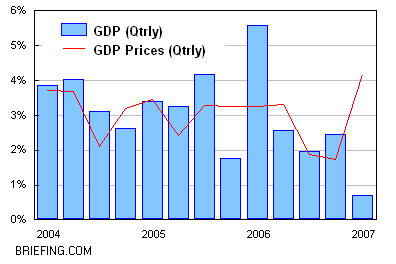
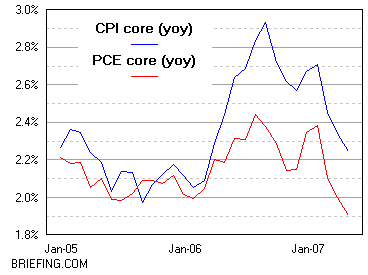
outlook for strong second quarter growth is at the heart of the recent rise in long term yields. After Q1 showed the weakest growth in four years, the rebound in Q2 and expectations for strong growth over the second half have rekindled thoughts of further Fed policy tightening -- despite the fall in core PCE inflation to 1.9%.
The sources of Q1 weakness are detailed in the
economic calendar link. The general expectation for stronger Q2 growth have come from the drags in Q1 -- global trade, business investment and inventory growth as well as moderate consumer spending after the breakneck 4% pace over the prior two quarters.
Briefing.com's current estimate is a strong 3.7% but could easily top 4% -- the strongest in over a year.
The
lessening drag from housing is suggested by residential construction spending running at half the speed of Q1.
Improvements also come from business investment given the recent gains in capital goods orders, production and stronger expectations shown by the back to back annual highs in the ISM index. The draw down in inventories added to the weakened demand as April's strongest rise since September argues that i
nventories will also provide a boost to Q2 growth after the significant drag over the last few quarters.
Consumer spending, with a majority weight in GDP, is
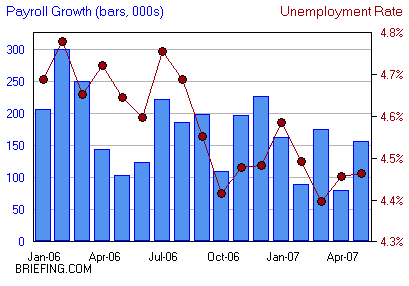
expected to cool after the powerful 4.2% gains over the last two quarters. But with income growth running at a 6% annual pace and unemployment at a low 4.5%, the strong trend pace will continue.
Net exports have swung from positive to negative GDP contributors over the last year. Despite high oil prices April imports fell 2% to leave a
lower than expected trade deficit to start off the quarter. Exports have shown new record highs in eight of the last nine months as strong global growth and the weaker dollar provide the outlook.
After a first quarter showing just 0.7% growth, the rebound in Q2 may be just that. While we expect a stronger second half given the reduced decline in housing, we continue to stand with growth at or below 3%. The Fed looks for sub-3% growth in 2007 and 2008.
'06 Q3 Q4 '07 Q1 Q2 est Q3 est Real GDP2.02.50.73.72.7GDP Price Index1.91.74.23.32.5Consumer Spending2.84.24.22.02.5Business Investment10.0-3.12.67.05.0Unemployment Rate4.74.54.54.54.6Fed policy target (avg)5.35.35.35.3 act5.310-yr Tsy Yld (avg)4.94.64.74.9 act5.1
Economic Growth
- Q1 GDP fell to just 0.7% given housing, global trade, inventories and weak government spending.
- Strong rebound expected in Q2 tied to business investment, inventories and trade.
- Consumer spending supported by full employment and 6% yoy income growth. Expected to hold just below 3% in 2007.
- Housing is the key drag but is lightening. Construction will lag home sales given large inventory of unsold homes.
- Business equipment investment outlook has strengthened given a rebound we expect to continue.
- Global trade is a swing factor -- lifted GDP growth in two of the last four quarters. Weak dollar and strong global growth argue for a positive effect in Q2 and beyond.
- Fed policy is intended to slow economic growth. Policy expected to be on hold through year end (at least).
Employment
- The tight labor market is the strongest factor of the economy.
- The March post recession low of a 4.4% unemployment rate hasn't yet shown any effect from slower growth.
- Private service payrolls dominate growth. Weakness centered in construction and manufacturing.
- Available labor supply is growing tight, the labor force has contracted since December.
- A 5% unemployment rate is considered inflation neutral full employment. Lower level an inflation risk.
- Initial unemployment claims are volatile but consistent with a tight labor market and lack of available workers.
Inflation Outlook
- Core inflation risks are fading. But caution about non-core strength is getting stronger.
- Core CPI fell to 2.2% in May as core PCE inflation reached 1.9% -- now within the Fed's 1%-2% "comfort zone."
- Annual growth of unit labor costs are at a five quarter low of 2.2% yoy. Strong profits provide a buffer against rising prices.
- Input prices seen in core PPI at just 1.6% yoy but none flowing to CPI where services (excluded from PPI) provide the pressure.
- Pricing pressures have reaccelerated in non core components of food (bio fuel demand) and energy.
Questions, comments or feedback may be e-mailed to the author: Timothy E. Rogers






 . That fantasy just sunk
  .
.


