Does war tend to have a predictable effect on I fund?The objective is fairly simple, no boots on the ground, pound the ground level, take them as far back as the 1950s. Not that I condone any intervention, but this as close of an opportunity as we will ever get. If the second-order effects trickle down, we may reduce the supply of weapons to Russia, Lebanon, Syria, Yemen. If so, then perhaps we'll see a major stability shift in the region in our favor. Here's the rub, if this works, then perhaps Russia will fold faster, and if this happens before the mid-terms, the Dems are in trouble.
The good news, the markets have 2-3 days to digest this before we open, I happen the think we are well positioned for a +2% day on Monday. I did take a small entry on Friday's close, and will exit on a pop.
In an Iran Conflict Scenario, Most common short-term pattern:
- Oil ↑
- Defense stocks ↑
- Gold ↑
- Broader stock market ↓
- Airlines & travel ↓

-
The Forum works well on MOBILE devices without an app: Just go to: https://forum.tsptalk.com
-
Please read our AutoTracker policy on the IFT deadline and remaining active. Thanks!
-
$ - Premium Service Content (Info) | AutoTracker Monthly Winners | Is Gmail et al, Blocking Our emails?
Find us on: Facebook & X | Posting Copyrighted Material
-
Join the TSP Talk AutoTracker: How to Get Started | Login | Main AutoTracker Page
You are using an out of date browser. It may not display this or other websites correctly.
You should upgrade or use an alternative browser.
You should upgrade or use an alternative browser.
WAR
- Thread starter James48843
- Start date

- Reaction score
- 937
Iran vows revenge after the killing of its top leader and trades strikes with Israel in widening warIran vowed revenge Sunday after the killing of its supreme leader and traded strikes with Israel as part of a widening war prompted by a surprise U.S. and Israeli bombardment. Blasts in Tehran sent a...
|
[td][/td]

Boghie
Market Veteran
- Reaction score
- 463
Yes...Does war tend to have a predictable effect on I fund?
But, it is too late to worry about it. It will affect all equity funds anyway.
What we should be looking for is the rate of Iranian missile/terrorist attacks. Is it growing, normalizing, or declining.
Boghie
Market Veteran
- Reaction score
- 463
Interview with VDH before the strikes on Iran...
My guess is that this is already largely over. Iran is a pariah state with very few allies - all of which are turds. They cannot defend themselves either. If you are going to be an international pariah you had best have a very, very good military. The reality of it is that we and Israel can just stop and restart as desired. We don't have to waste a bunch of political capital on the issue.
My guess is that this is already largely over. Iran is a pariah state with very few allies - all of which are turds. They cannot defend themselves either. If you are going to be an international pariah you had best have a very, very good military. The reality of it is that we and Israel can just stop and restart as desired. We don't have to waste a bunch of political capital on the issue.

JTH
TSP Legend
- Reaction score
- 1,348
I exited all my short-term positions last night, with the State Of Union address now behind us, I figure this increases the odds of an IRAN-Escalation over the weekend. Remember, the Donald loves to sucker punch people, so perhaps we'll get some movement soon.
Does war tend to have a predictable effect on I fund?
Well, if we believe about 80% of petrodollar is tied to USD, a spike in Oil should correlate to a spike in USD, thus this goes against the I-Fund. But this implies a rush into USD as a safe asset where in this case it's the US directly causing the spike in Oil.
We have to consider Europe is more depended on ME oil than we are, if their 1/3rd consumption of ME export is true, then they take the brunt of the hit here. But I'm not sure TSP is fast enough to escape the drop.
Last edited:

James48843
TSP Talk Royalty
- Reaction score
- 1,145
Kuwaiti shot down 3 U.S. F-15 fighters. Well, there goes a half-billion dollars. Poof.
Boghie
Market Veteran
- Reaction score
- 463
Kuwaiti shot down 3 U.S. F-15 fighters. Well, there goes a half-billion dollars. Poof.
F-15s don't cost that much
So far, this demonstrates that Kuwait is the most effective defender of Iranian airspace.


SteelSaving
TSP Strategist
- Reaction score
- 79
Laying off 4,700 federal employees for the year will buff that right out.
- Reaction score
- 937
US strikes on Iran triggered by Israel’s plan to launch attack, Rubio says
Chris Stein in WashingtonMon, March 2, 2026 at 9:50 PM EST
US strikes on Iran triggered by Israel’s plan to launch attack, Rubio says
Democrats disturbed by rationale that Trump ordered pre-emptive strikes out of concern about Tehran retaliation
So instead of talking Israel down we just went along with it.
JTH
TSP Legend
- Reaction score
- 1,348
US strikes on Iran triggered by Israel’s plan to launch attack, Rubio says
Chris Stein in Washington
Mon, March 2, 2026 at 9:50 PM EST
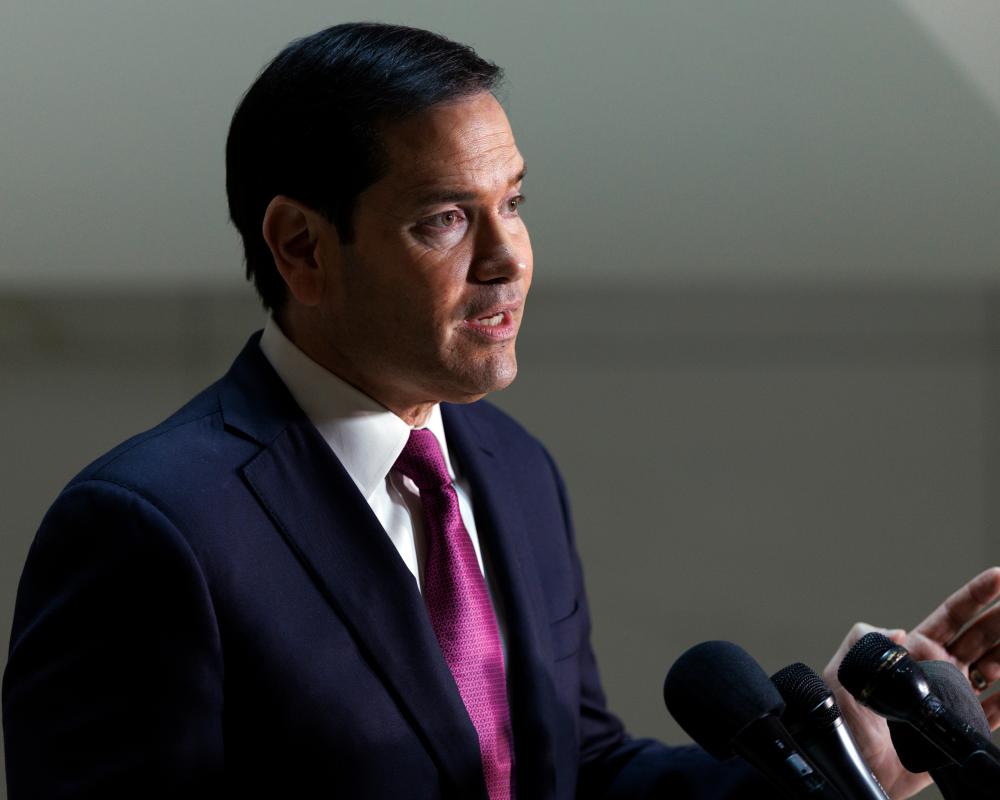
US strikes on Iran triggered by Israel’s plan to launch attack, Rubio says
Democrats disturbed by rationale that Trump ordered pre-emptive strikes out of concern about Tehran retaliationwww.yahoo.com
So instead of talking Israel down we just went along with it.
Well, (not that I trust anything this administration says), but saying Iran is going to attack us is like saying it's going to rain in Seattle. You know that kind of rain that your old truck doesn't have a slow-enough wiper setting to justify turning it on to clear the windshield of 2 drops.
But I would like to point out
Grok: Since 1979 how many American Deaths are linked to Iran?
Answer: Conservative tallies from major attacks and Iraq exceed 900–1,000 (e.g., ~500–600 from Beirut + ~600 from Iraq + dozens from others). Broader claims (including indirect links or Afghanistan) reach "well over a thousand" or "more than 1,000." These figures exclude non-fatal injuries/maimings (thousands) and focus on deaths directly or proximately linked via U.S. government assessments.
Chat GPT:
Major incidents with documented or widely cited U.S. deaths
- 1983 Beirut Marine Barracks bombing — Iran-backed group killed 241 U.S. service members.
- 1983 U.S. Embassy bombing in Beirut — killed 17 Americans.
- 1996 Khobar Towers bombing (Saudi Arabia) — 19 U.S. Air Force personnel killed (linked to Hezbollah/Iran).
- Iraq War (2003–2011) — U.S. military analysts estimate hundreds of U.S. troops were killed by Iranian-supplied weapons (explosively formed penetrators and militia attacks). Figures from Pentagon and analysts range from about 196 to ~600+; some commentators count even more when including broader militia attacks.
Boghie
Market Veteran
- Reaction score
- 463
Interesting...
There look to be dots all over the place. Venezuela used to launder oil of the Russkie shadow fleet - for China, India, and probably some of the EuroTrash (who sanctimoniously mau-mau sanctions, while breaking them legalistically and politically). Iran's sanctioned oil flows to the world's bright spots like China and probably EuroTrash Land via cutouts - but, not so much now. And, tragic accidents are happening to Russkie tankers of all types while on Med Cruises - maybe because their location transponders routinely fault and get turned off.
I would be having a sad, but my schedule is all filled up. Can't find the time for a proper sad.
There look to be dots all over the place. Venezuela used to launder oil of the Russkie shadow fleet - for China, India, and probably some of the EuroTrash (who sanctimoniously mau-mau sanctions, while breaking them legalistically and politically). Iran's sanctioned oil flows to the world's bright spots like China and probably EuroTrash Land via cutouts - but, not so much now. And, tragic accidents are happening to Russkie tankers of all types while on Med Cruises - maybe because their location transponders routinely fault and get turned off.
I would be having a sad, but my schedule is all filled up. Can't find the time for a proper sad.
James48843
TSP Talk Royalty
- Reaction score
- 1,145
New attack today- a Russian “Shadow” LNG tanker operating in the Mediterranean near MALTA was set on fire. This is a huge LNG ship carrying Russian LNG enroute to China.
No one is claiming responsibility.
It could be Ukraine.
It could be Iran (mistaking it for another nationality?)
It could be somebody else entirely. Heck, it could be the USA , or CIA, or anybody.
The point is- it’s in the Mediterranean, Not the Persian Gulf. That brings far more risk to a new area.,
Trump says we’ll escort tankers at Hormuz? Um, we don’t have enough Destroyers to escort 150 tankers lined up. We barely have enough to try and keep two aircraft carrier groups safe on the region. Our Naval facility at Bahrain has been hit. We aren’t running extra escort services anywhere.
And who is going to be the first ones through to test whether it’s closed or not?
Malta story about the LNG tanker on fire: I expect higher oil prices.ahead.

 www.facebook.com
No one is claiming responsibility.
It could be Ukraine.
It could be Iran (mistaking it for another nationality?)
It could be somebody else entirely. Heck, it could be the USA , or CIA, or anybody.
The point is- it’s in the Mediterranean, Not the Persian Gulf. That brings far more risk to a new area.,
Trump says we’ll escort tankers at Hormuz? Um, we don’t have enough Destroyers to escort 150 tankers lined up. We barely have enough to try and keep two aircraft carrier groups safe on the region. Our Naval facility at Bahrain has been hit. We aren’t running extra escort services anywhere.
And who is going to be the first ones through to test whether it’s closed or not?
Malta story about the LNG tanker on fire: I expect higher oil prices.ahead.
114K views · 496 reactions | A gas tanker believed to form part of Russia’s shadow fleet exploded in the early hours of Tuesday morning in waters between Malta and Libya, with sources telling the Times of Malta the vessel was “likely” attacked by ene
A gas tanker believed to form part of Russia’s shadow fleet exploded in the early hours of Tuesday morning in waters between Malta and Libya, with sources telling the Times of Malta the vessel was...
www.facebook.com
JTH
TSP Legend
- Reaction score
- 1,348
Iran’s Shahed drone stockpile (early March 2026 estimates):
- ~80,000 total (mostly Shahed-136/131 variants) — consistent figure from Israeli intelligence, analyst reports, and media citing “huge stockpile”
- Expended so far: 1,000–2,000+ in current conflict
- Daily production: 400–500 units (hundreds per week in conservative estimates)
- Range: 700–2,500 km; cheap ($20k–$50k each) and mass-produced
| Country/Region | % of Components | Key Details (as of 2025–early 2026) |
|---|---|---|
| China | 60–80% (electronics: ~80%) | 41+ critical components (engines, batteries, carbon fiber, antennas, radios, carburetors, fiber-optics). Frontelligence Insight: 60–65% overall; Ukrainian Foreign Intelligence: ~80% of critical electronics. Chinese parts now dominant in new production. |
| United States | ~20–30% (declining) | Still present (55 parts in one 2023 example); microchips, GNSS. Share dropped as China substitutes increased. |
| Germany | Significant (137 specific items documented) | Infineon transistors, other electronics; persistent despite sanctions. |
| Switzerland | ~5–10% | 13 parts in 2023 example (STMicroelectronics). |
| Japan | ~3–5% | 6 parts in 2023 example. |
| Other | ~5–10% | UK, Taiwan, Netherlands, Ireland, Canada, etc. (newer variants). |
| Russia/Iran | <10% (assembly + engine) | Airframe, warhead (now domestic), final integration; engine increasingly Chinese. |
| Category | Primary Origins (Share Where Known) | Key Examples & Companies | Notes on Sourcing |
|---|---|---|---|
| Electronics & Microchips (microcontrollers, flash memory, regulators, transceivers, ADCs, processors, GNSS modules, antennas) | ~77–80% United States (early models); shifted to ~60% China by 2025; rest Europe/Asia | Texas Instruments, Analog Devices, Micron, Marvell, ON Semiconductor, Maxim Integrated, Freescale, Hemisphere GNSS (US); STMicroelectronics (Switzerland); Murata (Japan); Tallysman (Canada) | ~52–57 components per drone from 13–16 Western firms. Many date-stamped as new as 2023–2024. Routed via Turkey, UAE, China, Central Asia. China now supplies ~80% of critical electronics for Russian production. |
| Semiconductors & Transistors | Germany, US, China | Infineon Technologies (up to 8–12 transistors per drone); International Rectifier (now Infineon) | Persistent German parts via shell companies and third countries despite sanctions. |
| Airframe & Composites (fiberglass, carbon fiber, honeycomb structures, epoxy resins) | China (dominant for Russian production); some Iran/Russia domestic | Chinese carbon fiber, resins, fiberglass suppliers | Iranian versions use basic fiberglass; Russian variants incorporate more Chinese carbon fiber for strength/weight. Raw materials often from global chemical suppliers rerouted. |
| Engine & Propulsion | Iran (original); increasingly China for mass production | MD-550 (Iranian copy of German Limbach L550E, made by MADO/Oje Parvaz Mado Nafar); Chinese clones (e.g., via Beijing Micropilot or direct Limbach copies) | Engine is the most "domestic" part, but core technology stolen/reverse-engineered from Germany ~20 years ago. Russia imports Chinese piston engines for scale. |
| Servomotors, Batteries, Fuel Systems, Wiring | Mixed Western/Chinese | Hitec (US servos); various Chinese batteries, fuel pumps (e.g., Polish-made by German Ti Automotive/TI Fluid Systems) | Fuel pumps and batteries often Chinese or rerouted European. |
| Guidance & Other (INS, GPS/INS modules, servos) | US, China, Europe | Hemisphere GNSS, various Chinese CRP antennas, fiber-optic cables (for newer anti-jam versions) | China supplies navigation upgrades and fiber-optics to counter jamming. |
James48843
TSP Talk Royalty
- Reaction score
- 1,145
Well- while you were distracted elsewhere-
The USA just launched a war inside Ecuador.
Did you have Ecuador on your bingo card?
03/03/2026 10:50 PM EST
U.S. forces have launched military operations with Ecuador against “designated terrorist organizations” inside the South American country, Southern Command said Tuesday.
The military released no details on the operations but suggested in a statement that it was an extension of strikes carried out by the Trump administration against suspected drug trafficking organizations in the region.
“We commend the men and women of the Ecuadorian armed forces for their unwavering commitment to this fight, demonstrating courage and resolve through continued actions against narco-terrorists in their country,” said Marine Gen. Francis L. Donovan, commander of U.S. Southern Command.
Since President Donald Trump took office, the U.S. has taken aggressive steps to curb the flow of drugs from the Southern hemisphere. The administration has conducted about 45 strikes against suspected smuggling vessels in the Caribbean and Pacific Ocean, killing more than 150 people.
Read more: https://www.politico.com/news/2026/03/03/us-military-operations-ecuador
The USA just launched a war inside Ecuador.
Did you have Ecuador on your bingo card?
US launches military operations in Ecuador
Source: Politico03/03/2026 10:50 PM EST
U.S. forces have launched military operations with Ecuador against “designated terrorist organizations” inside the South American country, Southern Command said Tuesday.
The military released no details on the operations but suggested in a statement that it was an extension of strikes carried out by the Trump administration against suspected drug trafficking organizations in the region.
“We commend the men and women of the Ecuadorian armed forces for their unwavering commitment to this fight, demonstrating courage and resolve through continued actions against narco-terrorists in their country,” said Marine Gen. Francis L. Donovan, commander of U.S. Southern Command.
Since President Donald Trump took office, the U.S. has taken aggressive steps to curb the flow of drugs from the Southern hemisphere. The administration has conducted about 45 strikes against suspected smuggling vessels in the Caribbean and Pacific Ocean, killing more than 150 people.
Read more: https://www.politico.com/news/2026/03/03/us-military-operations-ecuador
Boghie
Market Veteran
- Reaction score
- 463
The OPSEC in the Iranian battlespace has been amazing. Not a whole lotta leaks or flapping gums.
It starting to seem as if Iran is a spent force. They may be attempting to organize for better fire control, or they may just be running out of missiles, drones, launchers, skilled operators, or a mix of all that stuff. I don't see much in the news today. We shall see.
They have no control of the sea, they have no control of the air - how are they going to mine the straight? I was thinking anti-ship missiles, and that may still be in play. My guess is that we knew where they were/are.
I have read that the most modern of the Shahed drones can be remote piloted, so that may be an option. Their control communication would also have to be available to use them. The ones that are pre-targeted would have a hard time hitting a moving ship so that really isn't an option. Same, same for their ballistic missiles - if they have any of those remaining. Those missiles require obvious launchers. The Shaheds don't require easily targeted launchers.
There are, apparently, already tankers running the gauntlet.
It starting to seem as if Iran is a spent force. They may be attempting to organize for better fire control, or they may just be running out of missiles, drones, launchers, skilled operators, or a mix of all that stuff. I don't see much in the news today. We shall see.
They have no control of the sea, they have no control of the air - how are they going to mine the straight? I was thinking anti-ship missiles, and that may still be in play. My guess is that we knew where they were/are.
I have read that the most modern of the Shahed drones can be remote piloted, so that may be an option. Their control communication would also have to be available to use them. The ones that are pre-targeted would have a hard time hitting a moving ship so that really isn't an option. Same, same for their ballistic missiles - if they have any of those remaining. Those missiles require obvious launchers. The Shaheds don't require easily targeted launchers.
There are, apparently, already tankers running the gauntlet.
Boghie
Market Veteran
- Reaction score
- 463
Paragraph 1 in the Politico article @James48843 referenced:
Come on James
Oranage Man Bad will do something dumb, he will get cocky. Wait for something real.
U.S. forces have launched military operations with Ecuador against “designated terrorist organizations” inside the South American country, Southern Command said Tuesday.
Come on James
Oranage Man Bad will do something dumb, he will get cocky. Wait for something real.
James48843
TSP Talk Royalty
- Reaction score
- 1,145
Oh, well, that is different, right?
House Speaker Mike Johnson rejected the idea that the United States is at war with Iran despite President Donald Trump and Defense Secretary Pete Hegseth both saying the U.S. is at war.
The speaker delivered his weekly press conference, his first since Trump and Israel launched strikes on Iran over the weekend, and rejected the notion that the House needed to have a vote on the War Powers Act as the U.S. Senate was expected to later Wednesday.
“We’re not at war right now, we’re four days into a very specific, clear mission and operation,” Johnson told reporters. Rather, Johnson maintained that Iran had declared war on the United States — after the U.S. strikes that wiped out their leadership structure.
The claim comes despite the president's announcement of strikes on Iran alongside Israel. The White House and the Pentagon have dubbed the mission “Operation Epic Fury.”
Read more: https://www.yahoo.com/news/articles/not-war-now-house-speaker-160948266.html
'We're not at war right now': House Speaker Johnson makes stunning claim after Trump's barrage on Iran
Source: IndependentHouse Speaker Mike Johnson rejected the idea that the United States is at war with Iran despite President Donald Trump and Defense Secretary Pete Hegseth both saying the U.S. is at war.
The speaker delivered his weekly press conference, his first since Trump and Israel launched strikes on Iran over the weekend, and rejected the notion that the House needed to have a vote on the War Powers Act as the U.S. Senate was expected to later Wednesday.
“We’re not at war right now, we’re four days into a very specific, clear mission and operation,” Johnson told reporters. Rather, Johnson maintained that Iran had declared war on the United States — after the U.S. strikes that wiped out their leadership structure.
The claim comes despite the president's announcement of strikes on Iran alongside Israel. The White House and the Pentagon have dubbed the mission “Operation Epic Fury.”
Read more: https://www.yahoo.com/news/articles/not-war-now-house-speaker-160948266.html
James48843
TSP Talk Royalty
- Reaction score
- 1,145
“We’re not at war. This is a Special Military Operation”. - Vladimir Putin (2022), and Mike Johnson (speaker) 2026.
Similar threads

- Replies
- 2
- Views
- 472
