Valkyrie's Account Talk

@Grok

The Thrift Savings Plan (TSP) is administered by the Federal Retirement Thrift Investment Board (FRTIB), an independent U.S. government agency that oversees the plan and manages its investments in the interest of participants and beneficiaries. The FRTIB contracts with external asset managers to handle the day-to-day investment operations of the TSP's individual funds (such as the C, F, I, and S Funds). These managers are BlackRock Institutional Trust Company and State Street Global Advisors, with the dual-manager structure providing redundancy and backup capabilities. The G Fund, a government securities fund unique to the TSP, is managed directly by the U.S. Treasury.
 
doesn't Blackrock still control all of the TSP funds?


""Can banks legally confiscate your money?​


The fact is, any money you store in a banking institution now becomes an unsecured debt, and you become an unsecured creditor that is called on to share in the burden of a bank loss. You have little- to-no legal recourse. Act gives the right for banks to confiscate those funds in and use them as needed.
Written by Congress into the Dodd-Frank bill that replaced Glass-Steagall are provisions that the private banks can confiscate depositors money (called “haircutting”) to recapitalize the bank in case of bank failure.""
 

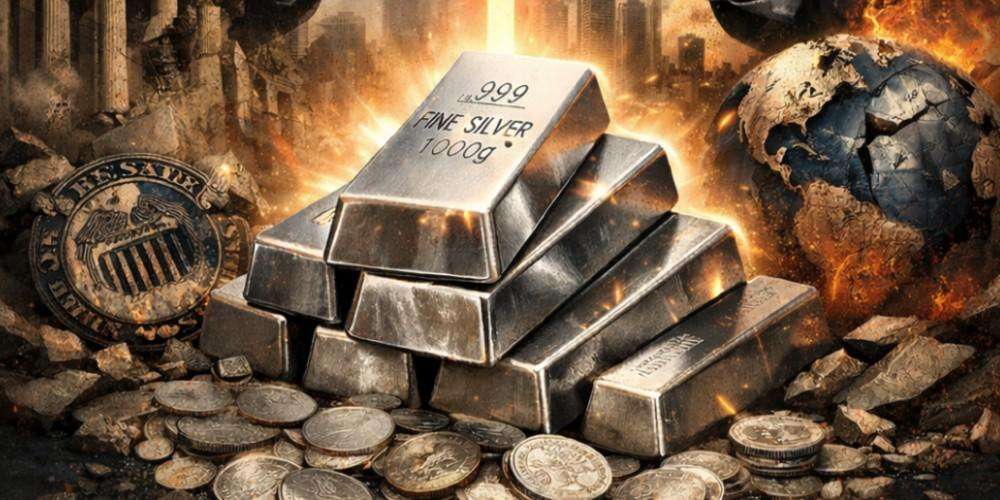
"The rules of the game have changed. At one time, western bankers could easily pull a few strings and keep the global price of silver within an acceptable range. But now financial centers in Asia are becoming more dominant, and supplies of physical silver are becoming extremely tight. As a result, western bankers are no longer able to exert the same level of control.


At the end of December, CME Group hiked margin requirements twice in a single week.

In the old days, that would have essentially been the equivalent of dropping an atomic bomb on the market. Of course they were able to drive the price of paper silver back down to about $70 for a few days, but here we are on January 6th, and it is already back to the $80 mark.


That isn’t the result that they were hoping to achieve. And the gap between the paper silver market and the physical silver market has become extremely alarming.


If you want to purchase an ounce of physical silver in the United States right now, it will cost you close to 90 dollars.


In some countries in Asia, an ounce of physical silver will cost you more than 100 dollars. Financial institutions that have enormous short positions are freaking out, because they are facing catastrophic losses. I think that this is going to be a huge story in the months ahead.


The bankers were probably assuming that they could crush this silver rally just like they crushed the rally in 1980. But the big difference this time around is that global supplies of physical silver have become extremely tight…"
 
Back
Top