WAR impacts

I am seeing some open source intel indicating significant attacks against US Forces in the last 24 hours. Unable to confirm anything, but several sources are saying Iran hit US 82nd Airborne, and Marine Corp assets in Kuwait; additional aircraft (multiple KC-135’s, a E-3 aircraft, and a Navy Poseidon P-8, along with targets in Oman, Saudi Arabia, and now the Houthi in Yemen have launched missiles against Israel, and say they will be closing the Red Sea.

In all, continued acceleration and instability. Not good at all.
Thank the Russians.
 
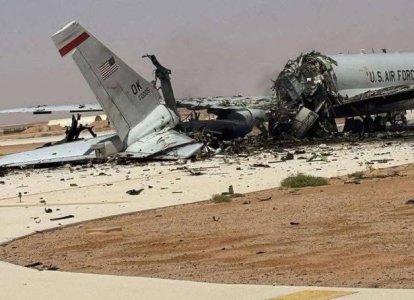
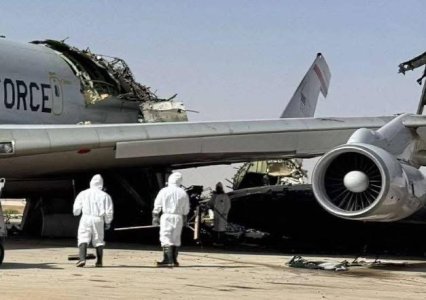
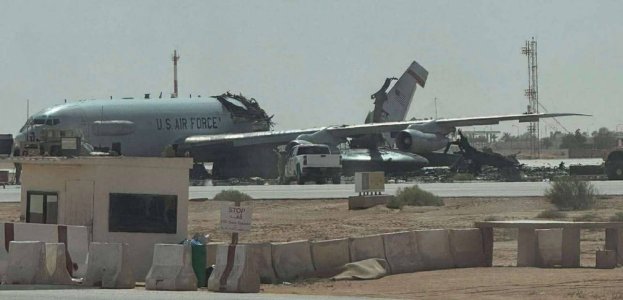
I’m gonna call this one “Confirmed.” An E3 destroyed.

BREAKING: New images reportedly show the total destruction of a U.S. Air Force E-3 Sentry at Prince Sultan Air Base following Iran’s ballistic missile and drone attack.

The aircraft appears to be tail number 81-0005—an E-3G assigned to the 552nd Air Control Wing out of Tinker Air Force Base—which had been deployed to the region in recent weeks.

Photos indicate a catastrophic loss. The strike appears to have deliberately targeted the rear section of the aircraft, where the rotating radar dome is housed—one of the most critical components of the E-3’s airborne early warning and command system. That dome contains the AN/APY-2 radar and other sensitive surveillance equipment used to track aircraft and coordinate operations across vast areas.

If confirmed, this would represent a major operational and strategic hit, as the E-3 is one of the U.S. military’s most important command-and-control assets in any theater.

Value of the E-3 loss is somewhere between $500 million and $700 million for the aircraft.

Developing…
 

Attachments

  • IMG_9340.jpeg
    IMG_9340.jpeg
    92.8 KB · Views: 8
  • IMG_9341.jpeg
    IMG_9341.jpeg
    66.5 KB · Views: 9
  • IMG_9342.jpeg
    IMG_9342.jpeg
    150.4 KB · Views: 8
I’m gonna call this one “Confirmed.” An E3 destroyed.

BREAKING: New images reportedly show the total destruction of a U.S. Air Force E-3 Sentry at Prince Sultan Air Base following Iran’s ballistic missile and drone attack.

The aircraft appears to be tail number 81-0005—an E-3G assigned to the 552nd Air Control Wing out of Tinker Air Force Base—which had been deployed to the region in recent weeks.

Photos indicate a catastrophic loss. The strike appears to have deliberately targeted the rear section of the aircraft, where the rotating radar dome is housed—one of the most critical components of the E-3’s airborne early warning and command system. That dome contains the AN/APY-2 radar and other sensitive surveillance equipment used to track aircraft and coordinate operations across vast areas.

If confirmed, this would represent a major operational and strategic hit, as the E-3 is one of the U.S. military’s most important command-and-control assets in any theater.

Value of the E-3 loss is somewhere between $500 million and $700 million for the aircraft.

Developing…

I can't find the exact info, PSAB was my first deployment. I recall the US side was really just about 25% of the entire place and I never left our area except for a moral trip, so I know it took some time to leave the entire compound. Mind you this was back in 99ish.

Point being, hitting US assets within this large area suggest, they have more Intel & capabilities than what some perceive.
 
I’m hearing 2 KC-135’s in that attack, along with the E-3. Iran is getting intel. No question about it.

Please can we just declare victory, and get the heck out of Dodge now?
 

Pharmaceutical supply chains get tangled in war with Iran​

Source: The Hill

03/29/26 2:00 PM

As President Trump’s war in Iran rages on, it’s posing a growing threat to the pharmaceutical supply chain and risks spiking the prices of many drugs, particularly those that depend on petrochemicals. The war in Iran and the effective closure of the Strait of Hormuz have caused energy prices to jump and disrupted supply chains for a range of industries.

While the Middle East is not a major pharmaceutical producer like China or India, there are still products that originate from the region, and many drugs rely on petrochemicals to be made. “If the instability really persists, you’ll probably see lead times, transportation costs that can impact direct items that we need for our medicines, including the key starting materials into active pharmaceutical ingredients,” Gerren McHam, vice president of external affairs at the API Innovation Center, told The Hill.

The U.S. Pharmacopeia (USP) issued a risk assessment report of the Middle East conflict, finding that the impact is currently limited. The region is responsible for only 0.3 percent of active pharmaceutical ingredient (API) production and 0.6 percent of oral solid dose production, with most of this concentrated in Jordan and Israel.

There are, however, a handful of drugs that those two countries have a significant hand in. Jordan produces about half of the world’s amoxicillin oral suspension and the same amount of API for etomidate, a fast-acting anesthetic. Seventy-three percent of API for flumazenil, a medication used to reverse the effects of benzodiazepines, is produced in Israel and Jordan.

Read more: https://thehill.com/policy/healthcare/5805149-iran-war-pharmaceutical-supply-chain/


(Jordan produces about half of the world’s amoxicillin oral suspension. That is a huge loss).
 
Back
Top