
02/17/26
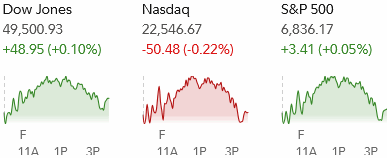
Stocks were mixed on Friday heading into the long weekend, but the selling came late, erasing most of the morning gains. Small caps came off their highs as well, but held onto a 1% gain. Bonds rallied as yields came down hard on the CPI data. The C-fund is flat on the year while the I-fund clings to a gain of nearly 10% six weeks into the new year.
It has been an interesting start to 2026 with the S&P 500 down slightly while the small caps, and particularly the I-fund, have been doing just fine. Even the charts are telling somewhat different stories, although no charts are in serious trouble, except for maybe big tech, but how long can that go on? Buying pullbacks in the top tech names has been nothing but prosperous for the last 10-20 years.
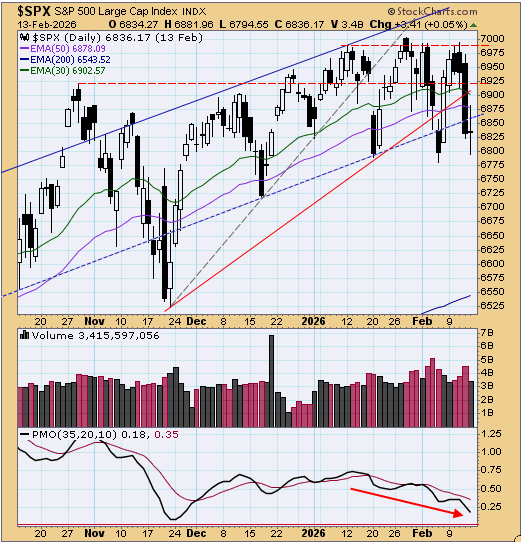
The S&P 500 (C-fund) continues to display characteristics of the bearish Wyckoff Distribution pattern, and on Friday it closed below a few key support levels. It wouldn't take much to regain these bearish breakdowns, but the index would likely need to see big tech join in.
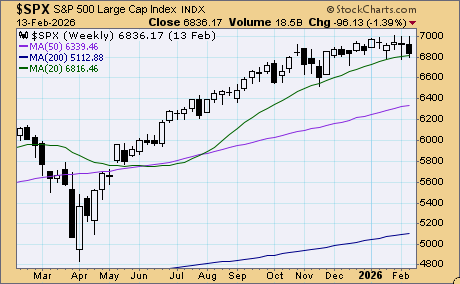
The weekly chart of the S&P 500, where every candlestick represents a week's worth of trading, has been holding firmly above the 20-week moving average, which is the sign of a strong chart and market, but it wouldn't take much to break below that average from where it is now, so again, big tech may need to come to the rescue.
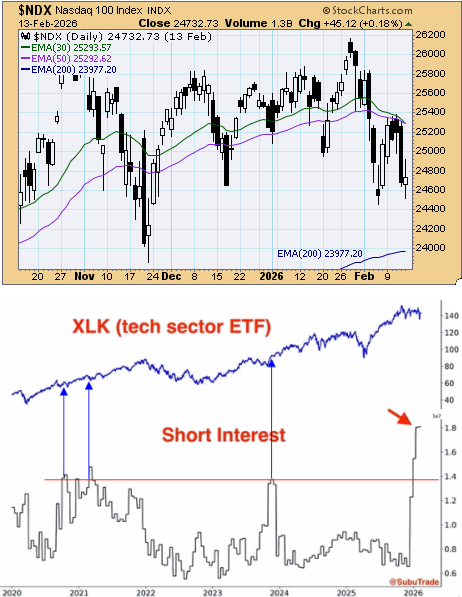
The problem is, the Nasdaq 100 large cap tech chart is on the brink of breaking down, spending most of February below its 20 and 50 day averages. The 200-day average is still over 700 below Friday's close - in case that is it's plan.
Source
However, this chart shows that short interest, bets against tech stocks, is at its highest level in years, and this has been a pretty good contrarian indicator. If tech stocks start moving up, these short positions will start to lose money, and the only way for these traders can get out of those positions would be to buy tech stocks, forcing what they call a short-squeeze rally. Does it have to happen? No. Can it? For sure.
The Dow Transportation Index tanked on Thursday but it did close back above its 20-day average that day, and the rebound resumed on Friday as the index gained 1,7%, and it looks like the 20-day average is going to survive the pullback.
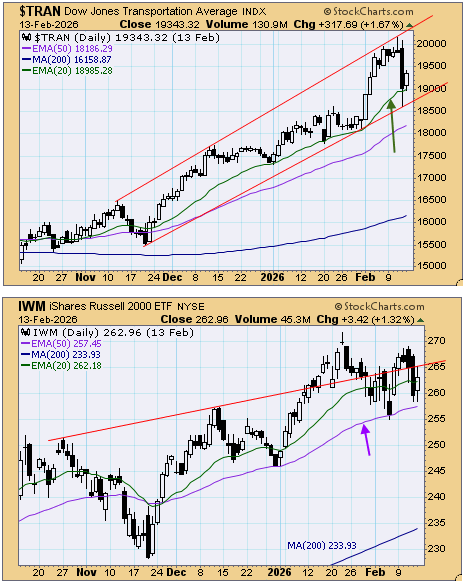
The small caps of the Russell 2000 had a good day and the chart has been holding above its 50-day average rather nicely in recent months. If that 50-day average fails, the 200-day average is a long way down, so support must hold here.
The 10-Year Treasury Yield tanked again on Friday, pushing it below some rising support and it closed at its lowest level since early December. There are plenty of reasons why yields would fall and one of those would be weakening economic data, but that hasn't been the case in recent month. Another reason is the waning threat of inflation, which is what the CPI report suggested on Friday, and we see what the yield did.
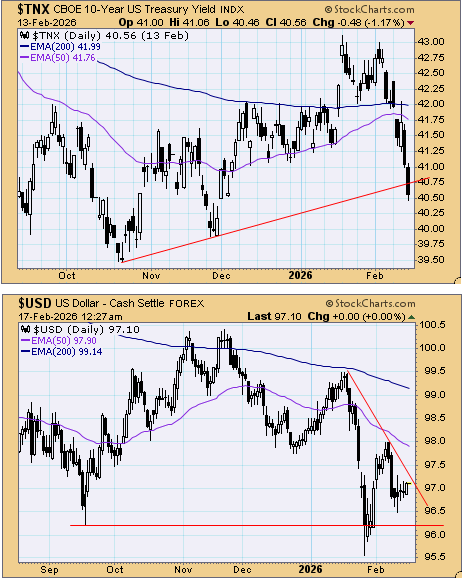
The dollar has been steady the last few days but remains in a downtrend after a recent rebound off of a lower low. A weakening dollar means the I-fund needs to be a consideration if you are in stocks.
It's another busy week for economic data, perhaps highlighted by the latest PCE Pricing inflation data on Friday.
Additional TSP Fund Charts:
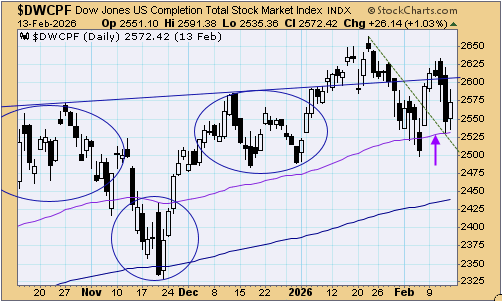
The DWCPF (S-fund) fell hard early in the week, last week, but so far it is finding support at its 50-day average. That's a positive development in a bull market, but this must hold with the 200-day average 5% below Friday's close.
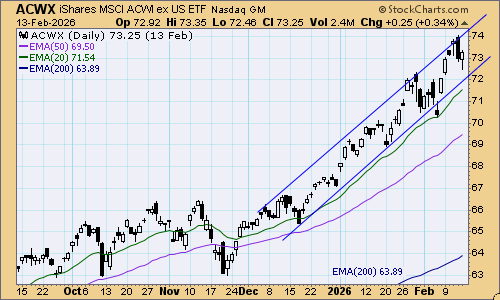
Unlike the US indices, the ACWX (I fund) had a positive reversal day on Friday. The blue trading channel just keeps on holding, not giving the dip buyers much of an opportunity to buy a decent pullback. It's quite a drop to the 200-day average, should there be any trouble here.
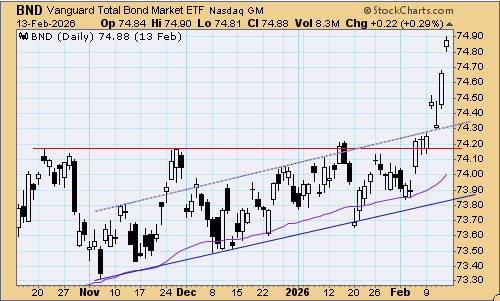
BND (bonds / F-fund) gapped up on Friday's tame inflation data, and it is threatening to go parabolic. If that's the case, there is a good chance that it would be tough to catch, but if it does pull back, the breakout lines would be the first line of defense.
Thanks so much for reading! We'll see you back here tomorrow.
Tom Crowley
Read more in today's TSP Talk Plus Report. We post more charts, indicators and analysis, plus discuss the allocations of the TSP and ETF Systems. For more information on how to gain access and a list of the benefits of being a subscriber, please go to: www.tsptalk.com/plus.php

Questions, comments, or issues with today's commentary? We can discuss it in the Forum.
Daily Market Commentary Archives
For more info our other premium services, please go here... www.tsptalk.com/premiums.php
To get weekly or daily notifications when we post new commentary, sign up HERE.
Posted daily at www.tsptalk.com/comments.php
The legal stuff: This information is for educational purposes only! This is not advice or a recommendation. We do not give investment advice. Do not act on this data. Do not buy, sell or trade the funds mentioned herein based on this information. We may trade these funds differently than discussed above. We use additional methods and strategies to determine fund positions.
Stocks were mixed on Friday heading into the long weekend, but the selling came late, erasing most of the morning gains. Small caps came off their highs as well, but held onto a 1% gain. Bonds rallied as yields came down hard on the CPI data. The C-fund is flat on the year while the I-fund clings to a gain of nearly 10% six weeks into the new year.
| Daily TSP Funds Return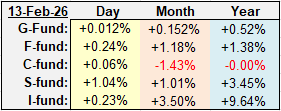
More returns |
It has been an interesting start to 2026 with the S&P 500 down slightly while the small caps, and particularly the I-fund, have been doing just fine. Even the charts are telling somewhat different stories, although no charts are in serious trouble, except for maybe big tech, but how long can that go on? Buying pullbacks in the top tech names has been nothing but prosperous for the last 10-20 years.
The S&P 500 (C-fund) continues to display characteristics of the bearish Wyckoff Distribution pattern, and on Friday it closed below a few key support levels. It wouldn't take much to regain these bearish breakdowns, but the index would likely need to see big tech join in.
The weekly chart of the S&P 500, where every candlestick represents a week's worth of trading, has been holding firmly above the 20-week moving average, which is the sign of a strong chart and market, but it wouldn't take much to break below that average from where it is now, so again, big tech may need to come to the rescue.
The problem is, the Nasdaq 100 large cap tech chart is on the brink of breaking down, spending most of February below its 20 and 50 day averages. The 200-day average is still over 700 below Friday's close - in case that is it's plan.
Source
However, this chart shows that short interest, bets against tech stocks, is at its highest level in years, and this has been a pretty good contrarian indicator. If tech stocks start moving up, these short positions will start to lose money, and the only way for these traders can get out of those positions would be to buy tech stocks, forcing what they call a short-squeeze rally. Does it have to happen? No. Can it? For sure.
The Dow Transportation Index tanked on Thursday but it did close back above its 20-day average that day, and the rebound resumed on Friday as the index gained 1,7%, and it looks like the 20-day average is going to survive the pullback.
The small caps of the Russell 2000 had a good day and the chart has been holding above its 50-day average rather nicely in recent months. If that 50-day average fails, the 200-day average is a long way down, so support must hold here.
The 10-Year Treasury Yield tanked again on Friday, pushing it below some rising support and it closed at its lowest level since early December. There are plenty of reasons why yields would fall and one of those would be weakening economic data, but that hasn't been the case in recent month. Another reason is the waning threat of inflation, which is what the CPI report suggested on Friday, and we see what the yield did.
The dollar has been steady the last few days but remains in a downtrend after a recent rebound off of a lower low. A weakening dollar means the I-fund needs to be a consideration if you are in stocks.
It's another busy week for economic data, perhaps highlighted by the latest PCE Pricing inflation data on Friday.
Additional TSP Fund Charts:
The DWCPF (S-fund) fell hard early in the week, last week, but so far it is finding support at its 50-day average. That's a positive development in a bull market, but this must hold with the 200-day average 5% below Friday's close.
Unlike the US indices, the ACWX (I fund) had a positive reversal day on Friday. The blue trading channel just keeps on holding, not giving the dip buyers much of an opportunity to buy a decent pullback. It's quite a drop to the 200-day average, should there be any trouble here.
BND (bonds / F-fund) gapped up on Friday's tame inflation data, and it is threatening to go parabolic. If that's the case, there is a good chance that it would be tough to catch, but if it does pull back, the breakout lines would be the first line of defense.
Thanks so much for reading! We'll see you back here tomorrow.
Tom Crowley
Read more in today's TSP Talk Plus Report. We post more charts, indicators and analysis, plus discuss the allocations of the TSP and ETF Systems. For more information on how to gain access and a list of the benefits of being a subscriber, please go to: www.tsptalk.com/plus.php
Questions, comments, or issues with today's commentary? We can discuss it in the Forum.
Daily Market Commentary Archives
For more info our other premium services, please go here... www.tsptalk.com/premiums.php
To get weekly or daily notifications when we post new commentary, sign up HERE.
Posted daily at www.tsptalk.com/comments.php
The legal stuff: This information is for educational purposes only! This is not advice or a recommendation. We do not give investment advice. Do not act on this data. Do not buy, sell or trade the funds mentioned herein based on this information. We may trade these funds differently than discussed above. We use additional methods and strategies to determine fund positions.
